
National Falls Prevention Awareness Week, September 21–25, 2026, is a timely reminder that staying steady on your feet is not simply a matter of being careful. It is something we can actively work on through movement, strength, balance, and a little attention to the environments around us.
Falls are common, but they are not an inevitable part of aging. The Centers for Disease Control and Prevention reports that falls among adults age 65 and older caused more than 43,000 deaths in 2024 and resulted in approximately 4.5 million emergency department visits. Those numbers are sobering, but they also reinforce an important point: many falls can be prevented.
One of the most effective ways to lower fall risk is to keep moving.
As we age, we naturally tend to lose muscle mass, strength, and power. This age-related loss, called sarcopenia, can make everyday things harder than they used to be: getting up from a chair, climbing stairs, carrying groceries, or catching yourself when you trip. The National Institute on Aging notes that loss of muscle mass, strength, and function can contribute to falls and fractures.
Strength training helps counter that loss. It does not have to mean a crowded gym or lifting heavy barbells. Resistance bands, light weights, seated exercises, body-weight movements, and even repeated sit-to-stands from a sturdy chair can help build the leg, hip, and core strength that supports safe daily movement. Stronger muscles make it easier to get up, walk with confidence, navigate uneven ground, and recover when your balance is challenged.
Balance deserves equal attention. Balance is not a fixed trait that we either have or do not have. It is a skill that can be practiced. Activities such as tai chi, yoga, and targeted balance exercises ask the body to shift weight, improve posture, strengthen stabilizing muscles, and react more effectively to changes in position. The National Institute on Aging specifically recommends balance and strength training, including tai chi, yoga, Pilates, weights, or resistance bands, as part of a fall-prevention plan.
There is another important reason to stay active: bone health.
Osteoporosis is often called a “silent disease” because bone loss can occur without obvious symptoms until a fracture happens. It develops when bone density and bone strength decrease, making bones more vulnerable to breaking from even a minor fall. The National Institute of Arthritis and Musculoskeletal and Skin Diseases explains that osteoporosis-related fractures occur most often in the hip, spine, and wrist.
While exercise cannot reverse every aspect of bone loss, weight-bearing movement and strength training help support healthier bones and the muscles that protect them. Walking, climbing stairs, and other activities performed against gravity can help slow bone loss. Strength work helps build the muscle needed to support the skeleton, improve posture, and reduce the likelihood of a fall in the first place. If you have osteoporosis, joint pain, or a history of falls, speak with your health care provider or physical therapist about the safest type of activity for you before starting something new.
At Noble Horizons, staying active is about much more than exercise. It is about preserving independence, confidence, and the freedom to keep participating in the life you enjoy. Our weekly Balance Class meets Wednesdays from 10:30 to 11:30 a.m. in the Community Room and is led by a member of Noble’s Physical Therapy Department. It is designed to improve balance, build strength, and increase confidence in daily movement.
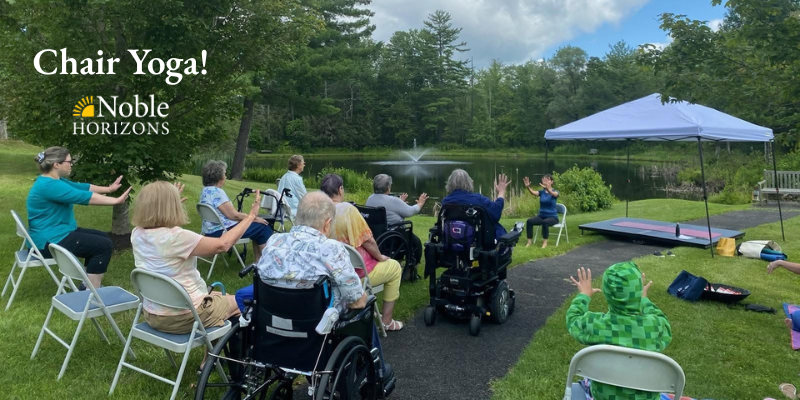
Noble also offers Gentle Tai Chi on Tuesdays from 10:30 to 11:30 a.m., with seated or standing options, as well as Chair Yoga with Corey on Thursdays at 10:30 a.m. All are welcoming ways to move with purpose, at your own pace, and alongside others.
This Falls Prevention Awareness Week, consider one small step: sign up for a class, take a daily walk, ask your provider about a medication review, or remove that throw rug that has been giving you trouble. Staying steady is built one practical choice at a time.
*This article should not be construed as medical advice – please consult with a licensed health care provider before engaging in any new exercise program or if you have concerns or questions regarding your balance or bone health.