

Perhaps your father has stopped calling friends. Your mother seems unusually worried, even when everyday plans go smoothly. Or you have noticed changes in your own sleep, motivation, or enjoyment and wondered whether this is simply what getting older feels like.
Mental Illness Awareness Week, October 4–10, 2026, is an opportunity to give these questions the attention they deserve. Emotional health matters throughout life, and older adults deserve care that takes their concerns seriously.
Depression is not a normal part of aging. Neither age nor a lifetime of handling challenges means someone should have to manage a mental health condition alone.
Look beyond sadness
Depression does not always look the way families expect. The National Institute on Aging notes that sadness may not be the main symptom in an older adult. Someone may instead seem withdrawn, less interested in familiar activities, or unable to enjoy things that once mattered.
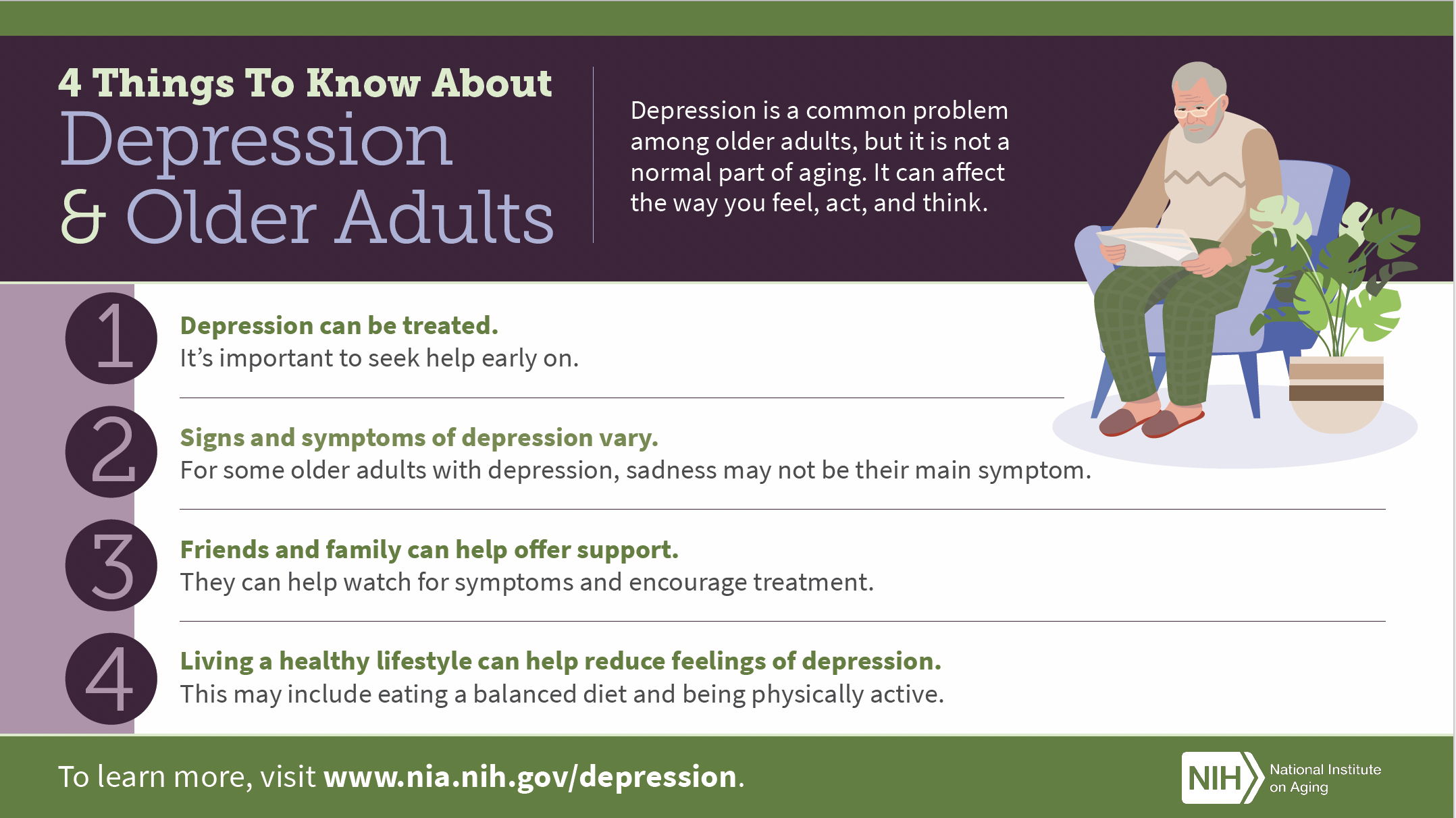
There are other warning signs, including changes in appetite or energy, sleeping too little or too much, irritability, persistent worry, difficulty concentrating, and feelings of hopelessness. Some people experience ongoing physical complaints alongside emotional changes.
One difficult afternoon does not establish a diagnosis. What deserves attention is a change from the person's usual behavior, particularly when symptoms persist or interfere with relationships, routines, or self-care.
Families can notice these patterns without trying to label them. “Dad hasn't wanted to see anyone for several weeks” is useful information to share with a clinician.
Life changes can affect emotional health
Retirement, bereavement, chronic illness, and changes in independence can alter a person's daily life. Grief and worry are understandable responses, but persistent distress deserves support. A person can be grateful for family and still struggle emotionally.
Loneliness and social isolation also matter. Someone may have very little contact with others or feel disconnected despite being surrounded by people.
Consider practical barriers before assuming someone has lost interest. Is transportation difficult? Does hearing loss make conversation exhausting? Has a friend moved away? Asking what makes participation harder can reveal a manageable obstacle.
Connection works best when it fits the individual. A regular coffee visit, a small art class, a walking companion, or a volunteer role may be more appealing than a crowded gathering. Ask what the person would enjoy rather than filling a calendar for them.
Start a conversation that invites honesty
Choose a quiet moment and describe what you have noticed: “You haven't seemed like yourself lately, and I'm concerned. How have you been feeling?”
Listen before offering solutions. Responses such as “You have so much to be thankful for” can unintentionally shut down the conversation. Try, “That sounds difficult. Would you like help making an appointment?”
For older adults, bringing up mental health may feel unfamiliar or uncomfortable. You do not need the perfect words. Telling your healthcare provider, “I'm not enjoying my days the way I used to,” gives the conversation a starting point.
A medical evaluation can clarify what is happening
A primary care provider is a good first stop. Some medical conditions and medications can cause symptoms resembling depression. An evaluation can review health history, medicines, and whether additional testing or a mental health referral is appropriate.
Treatment may include counseling, medication, or both. Older adults need careful medication review because age-related changes can affect how medicines are processed and increase the risk of interactions. Share a complete list of prescriptions, over-the-counter medicines, and supplements.
Bring brief notes about when changes began and how daily life has been affected. Ask when to follow up and whom to contact if symptoms worsen. Practical help with scheduling or transportation can make accessing care easier.
Sudden confusion is a separate concern requiring urgent medical assessment. MedlinePlus describes delirium as a rapid change in brain function that can occur with illness, medication effects, or other medical problems. Do not assume an abrupt change is depression or ordinary aging.
Know when help cannot wait
Take talk of suicide or wanting to die seriously. Asking directly about suicidal thoughts does not increase the likelihood that someone will act on them.
In the United States, call or text 988 for immediate crisis support. Call 911 in a life-threatening emergency.
Meaningful connection and professional care can help older adults move forward. Paying attention, listening respectfully, and helping someone take the next step can open the door to better days.
*This article should not be construed as medical advice. Please consult with a licensed health care provider if to discuss your or a loved one’s mental health.