
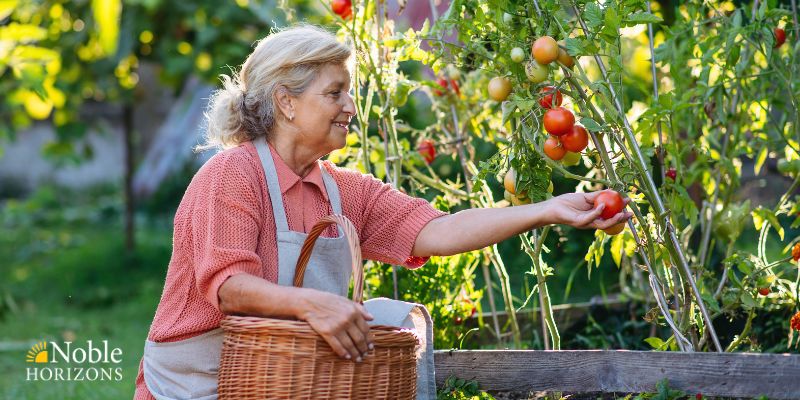
Compared to older adults who don't exercise, gardeners are significantly less likely to report cardiovascular disease, high blood pressure, diabetes, and poor mental health. Not bad for a hobby most people take up because they love being outside.
Gardening has always been one of those activities that feels good without anyone having to explain why. But the science behind it is worth knowing, especially for older adults and the family members who care about them. Because what looks like puttering in the yard is actually moderate-intensity physical exercise, Vitamin D production, stress reduction, and community building, all happening at the same time.
The Body Benefits Go Deeper Than You Might Think
Digging, planting, weeding, pruning, and hauling soil engage the arms, core, legs, and shoulders. The CDC classifies gardening as moderate-intensity physical activity, the same category as a brisk walk. For older adults, that kind of consistent, low-impact movement translates directly into better cardiovascular health, improved balance and coordination, and stronger grip strength, all of which matter enormously for independence and fall prevention.
There is also the matter of sunlight. Time spent gardening outdoors is one of the most natural ways for the body to produce Vitamin D, a nutrient critical for bone density and immune function that a significant portion of older adults are quietly deficient in. A daily session in the garden, even a short one, can make a real difference. Sunscreen and a wide-brimmed hat are still a good idea, but the sun itself is not the enemy.
Time in nature has been shown to measurably lower cortisol levels, the body's primary stress hormone. Mood improves. Anxiety eases. There is something about working with soil and living plants that quiets the nervous system in ways that are difficult to replicate indoors. Researchers have clocked meaningful stress reduction in as little as 20 minutes outside.
Why This Matters for Families, Too
For adult children keeping an eye on an aging parent, gardening checks a lot of boxes at once. It is gentle exercise that does not feel like exercise. It gets people outside. It provides daily purpose and routine. And for someone who has gardened for decades, it is an activity that connects them to who they have always been.
The key is making sure the activity adapts as the body does, so that limitations do not become reasons to stop altogether.
Adapting the Garden to Work for You
Mobility changes do not have to mean the end of gardening. They mean the beginning of a smarter approach.
- Raise the beds. Raised garden beds bring the soil up to a comfortable working height, eliminating the need to kneel or crouch. For anyone with joint pain or limited mobility, this one change can transform the experience. Large containers on a patio or balcony work just as well and can be placed at whatever height suits.
- Upgrade the tools. Ergonomic, lightweight tools with extended handles and padded grips reduce strain significantly. A rolling garden seat with handles for support makes low work safer and more comfortable. These are not compromises. They are smart equipment.
- Work in shorter sessions. Thirty minutes of active gardening is genuinely beneficial. There is no rule that says it has to be done all at once. Breaking the work into intervals protects joints and energy while still getting everything done.
- Choose plants that work with you. Perennials return every year without replanting. Native species tend to be hardier and less thirsty. Herbs like rosemary, mint, and basil thrive in small containers with minimal attention. Low-maintenance does not mean low-reward.
- Go vertical. Trellises and wall planters let tomatoes, cucumbers, and beans grow upward rather than across the ground. Harvesting standing up is far easier on the back and knees than bending down into a sprawling bed.
The Part Nobody Talks About Enough: Community
Gardening alongside other people does something that solo gardening cannot. It builds relationships. Swapping seeds, trading advice about pests, comparing what is blooming this week, these are the small, repeated conversations that create genuine friendship over time. Garden clubs give older adults a regular reason to gather, a shared vocabulary, and a community built around something they love.
The social dimension is not incidental. Isolation is one of the most significant risk factors for cognitive and physical decline in older adults. Regular participation in a group activity, especially one that involves being outdoors and moving, is protective in ways that are well documented and easy to underestimate.
The Noble Gardening Club and a Market Worth Marking on Your Calendar
At Noble Horizons in Salisbury, Connecticut, the Noble Gardening Club is living proof of everything described above. Residents tend communal plots across our 110-acre campus, share expertise across generations of gardening experience, and enjoy the satisfaction of watching something grow together. It is purposeful, physical, social, and genuinely joyful.
On July 24th from 11 a.m. to 2 p.m., Noble Horizons hosts its annual Farmers Market and Outdoor Concert. Much of what fills those market tables comes straight from the Noble Gardening Club's own plots, picked by the hands that planted it. Come for the produce. Stay for the music. See for yourself what a community looks like when it tends something together.
To learn more about life at Noble Horizons and the amenities and activities available to our residents, visit noblehorizons.org or call us at (860) 435-9851.